Workshop attendee
Tech Women Summit, Chișinău, October 2026
Everyone in the room felt safe and encouraged to ask any type of question. It was funny, it was inspiring, it was something new, interactive and definitely useful.

Cohort-based course
You know what your product does, but not yet how it works. In this hands-on course you spend three weeks in a real software product. You’ll build the technical judgement to speak with confidence, ask better questions, and spot risk early.
What you’ll be able to do
One-time payment. VAT included.
14-day refund from the cohort start, no questions asked
The free first mission runs as a live workshop in Lisbon on Friday 13 November 2026, 19:00, part of Portugal Tech Week. Come to the workshop



Feedback from our workshops
Workshop attendee
Tech Women Summit, Chișinău, October 2026
Everyone in the room felt safe and encouraged to ask any type of question. It was funny, it was inspiring, it was something new, interactive and definitely useful.
Workshop participant
Wey Wey Web, Málaga, November 2025
The course offers in-depth content, clear explanations, and very practical guidance, and the instructors were very open to answering questions.
For three weeks you’re the product manager at a company that sells a CRM. You run a real open-source CRM in a development environment, and each week a colleague brings you a problem. You solve it in the product, then apply the learnings on your own product at work. A free first mission, then two missions a week.
Free, live at a workshop or in your own time
Mission 1
Explain where a failed action broke, from the click to the database.
Run a real product in a development environment, and follow a failed save from the click to the database. Then give your bug report to an AI agent and test its fix.
How your product works
Mission 2
Name every service your product runs and every third party it sends data to.
Map the backend services, such as the background worker and the queue, and list every third-party service your customers’ data is sent to. Answer a prospect’s security questionnaire from a system map you drew yourself.
Mission 3
Judge how much work an integration is and where it could fail, before your team commits to it.
Send API requests, break them on purpose and receive a webhook. Write a feasibility brief that says how much work an integration sales wants to promise would take, and where it could fail.
From bug report to production
Mission 4
Write bug reports engineering can act on straight away, with the cause narrowed down.
Reproduce a bug only one customer sees by logging in as that user, compare the server’s response with what’s on the screen, and understand what the browser keeps in local storage and cookies, and when it goes wrong.
Mission 5
Tell a customer when a fix will reach them, and what could delay it.
Follow the fix you reported through code review and the CI checks and deploy it to a staging environment. Then ship and roll back a change of your own, and write the stakeholder update: where the fix is, when customers get it and what could delay it.
The evidence, then the decision
Mission 6
Answer a data question with your own query instead of waiting for an analyst.
Check that the events behind a number in the board deck fire, and answer with your own SQL query, so you don’t wait for someone else to answer a data question.
Mission 7
Decide between paying down technical debt and a new feature with evidence, and defend it in planning.
Use an AI agent to gather what you made in the earlier missions and check what it gives you. Write the decision brief, and collect your certificate.
When you finish
Finish the course and add your certificate to your LinkedIn profile.
Cohort-based course
How Your Product Works: Technical Foundations for Product Managers
7 missions completed · Little Parrot by productkind
Details may change as we develop the course, you can influence it, just email us at hello@littleparrot.app.
The course costs €800 from the second cohort. The founding cohort pays less, because you join before anyone has finished it and we’ll ask you for feedback. The earlier you enrol, the less you pay.
Early bird · enrol by Monday 14 December 2026
€490€800€310 off
VAT included
Enrol14-day refund from the cohort start, no questions asked
Includes
Paying through your company? Email hello@littleparrot.app and we’ll send an invoice.
Two missions a week, worked through whenever you have time, in a real product running in your development environment. You can ask questions in the Discord cummunity during the week.
A group of other product managers on the same missions, and an hour of live office hours every Tuesday from 5pm to 6pm GMT to ask questions and discuss the week.
After every mission there’s a short task on your own product, so you can apply what you’ve learned. Count on 2.5 hours a week for the essentials, 4.5 with completing all the missions.
We design and build every mission ourselves and run the live office hours.

Lead product manager
Kinga moved from luxury fashion into tech, joining Citrix as an account manager, then went to a coding bootcamp to understand how software works and moved into product management. She led teams on ecommerce, sales platforms and enterprise automation, most recently as a lead product manager, and has lived in six countries.
She organises the ProductTank meetups in Lisbon and is a certified executive coach. The course starts where she started: already working in tech, wanting to understand how software works.
Spoken at
Productized 2025Wey Wey Web 2025NDC Porto 2025Copenhagen Developers Festival 2025One Tech World 2025Geek Girls Portugal 2024
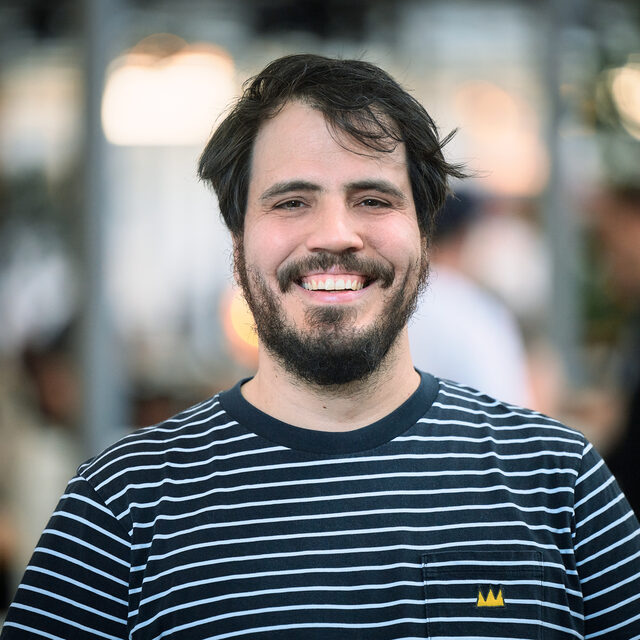
Principal software engineer
Tamas spent over 15 years as a software engineer and engineering leader, with technical roles at Datadog, Cazoo and Cloudera, and is a serial entrepreneur with a successful exit behind him.
He co-founded Green Fox Academy, a coding bootcamp that graduated over 3,000 people into tech careers, and ran it as Head of Education. He has mentored women and girls in software development for more than a decade.
Spoken at
Tech Women Summit 2026Wey Wey Web 2025NDC Porto 2025Copenhagen Developers Festival 2025
Feedback from our workshops
Workshop participant
NDC Porto, October 2025
Well prepared and planned and most importantly you gave opportunity to try by practicing. So far best workshop at the conference.
Workshop participant
Wey Wey Web, Málaga, November 2025
It was really inspiring and you are warm and generous tutors.
In our research with product managers, the same sentence kept coming up: “sometimes it does feel like I’m the least knowledgeable person in the room.” If that sounds familiar, here’s what changes: three weeks later you know how your product works under the surface, and you can follow a technical discussion and take part in it.
The cohort starts on Tuesday 19 January 2027, and the free first mission opens before then.
Enrol